

This article was cross-published by David Ganske on LinkedIn. You can access it directly here.
We have all been there before. There are some projects where you just can’t get to the finish line fast enough. You are pulling your hair out and dreading the next meeting. At the same time, there are other projects that you absolutely relish. The creative juices are flowing and you enjoy working with your counterparts.
Good and bad projects — and their relation to client and agency partnerships — go back as far as human history. Was there a person pulling the strings while an artist completed the cave drawings in Lascaux? How about the design and build of the treehouse in your parents’ backyard? I would venture to say that all of these engagements have similarities with the classic agency-client relationship that exists in today’s digital age.
I’ve had the pleasure of working with over 100 clean energy and climate tech brands to build and scale their marketing and communications efforts over the past five years while running DG+. During that time, I’ve had my share of great projects and not-so-great-ones that form the foundation of this article. That said, the takeaways here apply to virtually any industry or creative endeavor where collaboration, trust, and shared vision are at the heart of the work.
The DG+ Agency-Client Collaboration–Trust Framework
To help make sense of what makes some agency-client relationships thrive while others flounder, we created a simple framework that evaluates any agency-client relationship across two axes: collaboration and trust.
In the graphic below, the x-axis represents collaboration (from low to high) while the y-axis represents trust (also from low to high). Each quadrant reveals a different kind of working relationship — some productive, some painful.
While this framework may seem relatively straightforward and potentially too simplistic, the reality is that there are key insights from each quadrant that can be leveraged to set relationships up for success. Let’s walk through each of them.
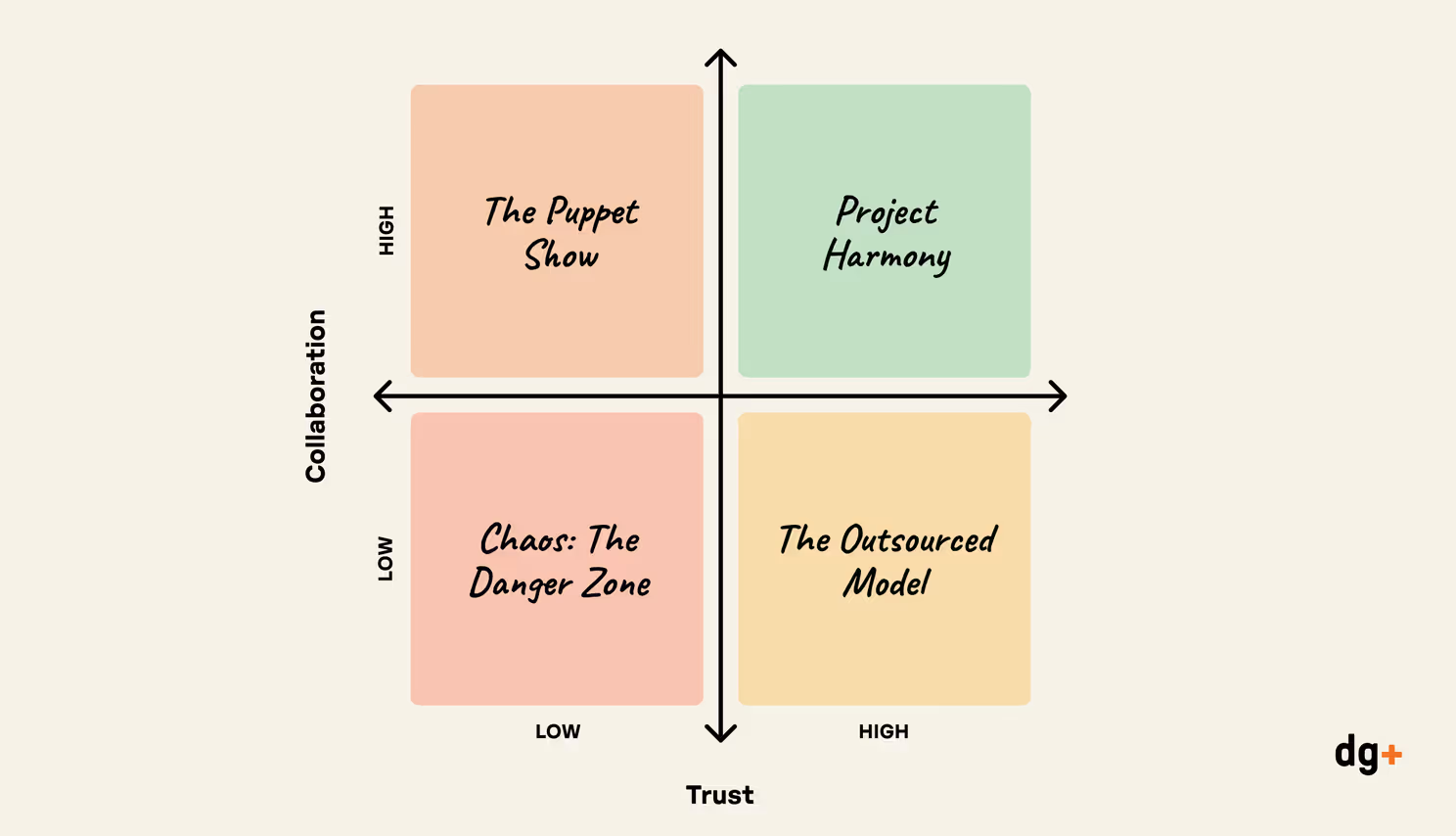
The Danger Zone: Low collaboration and low trust
This quadrant reflects the projects that we all want to avoid. They aren’t going well, and we struggle to have meaningful connections with our counterparts. Moreover, expectations may not be aligned — creating tension across both parties. That’s why we refer to it as “The Danger Zone.”
Moreover, there’s little engagement, poor communication, and even less trust in one another’s abilities. From the client side, deliverables may feel underwhelming or disconnected from the business goals. From the agency side, it often feels like trying to read minds without a map.
This setup leads to low-quality outputs, inefficiency, and frustration. Deadlines slip, revisions pile up, and no one is proud of the final product. These are the relationships that burn out fast — and sometimes never should have started in the first place. The good news is that there are typically red flags before these projects begin, which we will describe later in this article.
The Puppet Show: High collaboration and low trust
In this model, the client is heavily involved — but doesn’t necessarily believe in the agency’s expertise. Instead of seeking guidance or input, the client prescribes exactly what they want and expects the agency to execute like task rabbits. Creativity is stifled. Strategic value is underutilized.
This dynamic might be acceptable for one-off, tactical projects or for freelancers managed directly by an in-house team. But in an agency relationship, where clients are paying for strategic thinking, creative development, and high-impact execution, it’s a mismatch. The agency is treated like a vendor instead of a partner.
The Outsourced Model: Low collaboration and high trust
At first glance, this sounds like the dream for an agency. A client who gives you space and trusts you to do your job. But without collaboration, the agency ends up working in a vacuum. When strategic context and real-time feedback are missing, the work can start to drift. Sometimes this leads to delays at the approval stage — when stakeholders finally weigh in and derail the direction.
This model works reasonably well for early-stage companies that haven’t yet built out their internal marketing or creative functions. Trust is a great foundation. But without active collaboration, the results don’t reach their full potential. Better collaboration could have resulted in more impactful messaging, the inclusion of better proof points or case studies, or more refined strategy from the beginning.
Project Harmony: High collaboration and high trust
This is the upper-right quadrant — the high-functioning relationship we all strive for. It’s built on mutual respect, shared accountability, and a commitment to making great work together. Plus, team members are kind and show up ready for meetings.
In these relationships, clients recognize the value of their agency partners and vice versa. They provide timely feedback and clear direction. There’s a sense of shared ownership, where everyone — clients and agency alike — is invested in the outcome. Leaders and doers alike engage meaningfully, and that energy is contagious. The agency team feels empowered to go above and beyond, and the work shows it.
We’ve seen this firsthand at DG+. When both parties bring trust and collaboration to the table, we’re able to deliver bold creative, insightful strategy, and campaigns that drive measurable results.
Setting relationships up for success
Avoiding red flags
While the quadrants give us a helpful framework, it’s worth noting that relationships can shift and red flags pop up along the way that can jeopardize the dynamic. Here are a few signs we watch out for:
Lack of scope clarity: When clear deliverables aren’t well defined, a project is ripe for disappointment. A lack of boundaries can also spiral expectations and create scope creep. This one usually falls on the agency. It’s important to define scope properly and ask the right questions to the client to set a project up for success.
Rushed or undefined kickoffs: Starting work before clear alignment or launch planning almost always leads to rework and confusion. Both parties are often very eager at the beginning, but it’s important to launch a project the right way. Ensure documents are signed, the scope is confirmed, and all parties know their expectations.
No clear account ownership: Without a dedicated point person on both agency and client sides, approvals stall and decisions become bottlenecked. Known as the shared responsibility problem, when there isn’t a point person on each side, no one is ready to be the flag bearer to move the project forward.
Too many cooks: We have all heard of design by committee. If there are too many team members or experts weighing in, decision-making can stall and progress can be undermined. A project works best when our in-house counterparts are trusted and supported by their leadership. When approvals or reviews move beyond the close-knit client-agency team, edits are then relatively minor and quick.
In addition to the account management issues above, there are also behavioral issues that might signal a relationship that may be at risk. Below are some of the signs that we look for at DG+. While each of these in isolation might seem minor, over time they add up to strained dynamics and declining results.
- Relying solely on texting for communication
- Avoiding video calls or face-to-face interaction
- Frequently rescheduling or canceling meetings last-minute
- Undervaluing agency work or pinching hours unnecessarily
- Guarding one’s true self or feeling restrained
- Feeling the need to tiptoe or walk on eggshells
- Disrespectful communication
Sometimes these red flags actually present themselves in the business development process. If that’s the case, I’ve decided that these clients aren’t worth the effort. It’s important that I see a counterpart on video and they respect my time. Random texts and missed meetings before a contract is signed can actually be a powerful motivator to opt out of a client engagement before it goes downhill.
Build intentional working relationships
The good news is that high-functioning, high-trust relationships aren’t just happy accidents. They can be built intentionally with the right mindset and practices.
Shared values: Find counterparts who value openness and transparency. Relationships work best when both sides feel comfortable bringing up questions, ideas, or concerns early and often.
Flexibility on both sides: Rigid processes or attitudes make it hard to adapt when the unexpected arises. A little grace and agility go a long way. Discuss norms up front with your counterparts and decide when boundaries might be crossed.
Start with a clear scope: Be sure everyone knows what success looks like, how to get there, and how to measure it. Scope clarity builds confidence. How many deliverables? What is the deadline? These can be defined in the contract.
Clarity around roles: The agency team knows who is leading and who is accountable for certain tasks. Moreover, clients show up prepared, know what they need to contribute, and are ready to collaborate.
Truly get to know your counterparts (and teammates): Human relationships matter. Even in a professional setting, a little rapport builds the trust that fuels creative breakthroughs.
Use briefs and pre-approvals to align early: Outline creative directions or strategic plans before diving into execution. This avoids wasted time and ensures alignment.
Hold each other accountable: Good clients and good agencies both need to show up, follow through, and keep communication flowing.
A goal of true partnership
In today’s (mostly) virtual world, it’s tempting to treat client-agency relationships as transactions. But the best outcomes come from true partnership. If you're a client, take the time to find an agency that you trust and are willing to collaborate with deeply. If you're an agency, cultivate client relationships that honor both your expertise and your shared goals.
Collaboration and trust aren’t just “nice to have”. They are the foundation of better results, and they help us reach a more fulfilling working environment.
Read more news and insights from the DG+ team.
.png)


.png)
.avif)
Let’s talk about what you’re building.
Whether you’re refining your positioning, preparing for growth, or trying to make a complex product easier to understand, we’d love to hear more. Share a bit about your goals or challenges and we’ll get back to you with a clear, honest perspective on how we can help.
Skip the form and email us directly at hello@dgplusagency.com