
.avif)
Leigh Merrill constructs suburban streets from thousands of source images until the houses look perfectly ordinary but subtly impossible. Livia Corona photographs vast housing developments on the outskirts of Mexican cities, landscapes where thousands of nearly identical homes stretch across the desert in repeating patterns. Jeff Brouws photographs the quiet architecture of the American roadside: gas stations, parking lots, the familiar structures of the energy economy we move through every day without noticing. And in Edward Burtynsky's photographs, vast mines and industrial landscapes appear almost abstract from a distance, only gradually revealing themselves as the physical infrastructure of modern life.
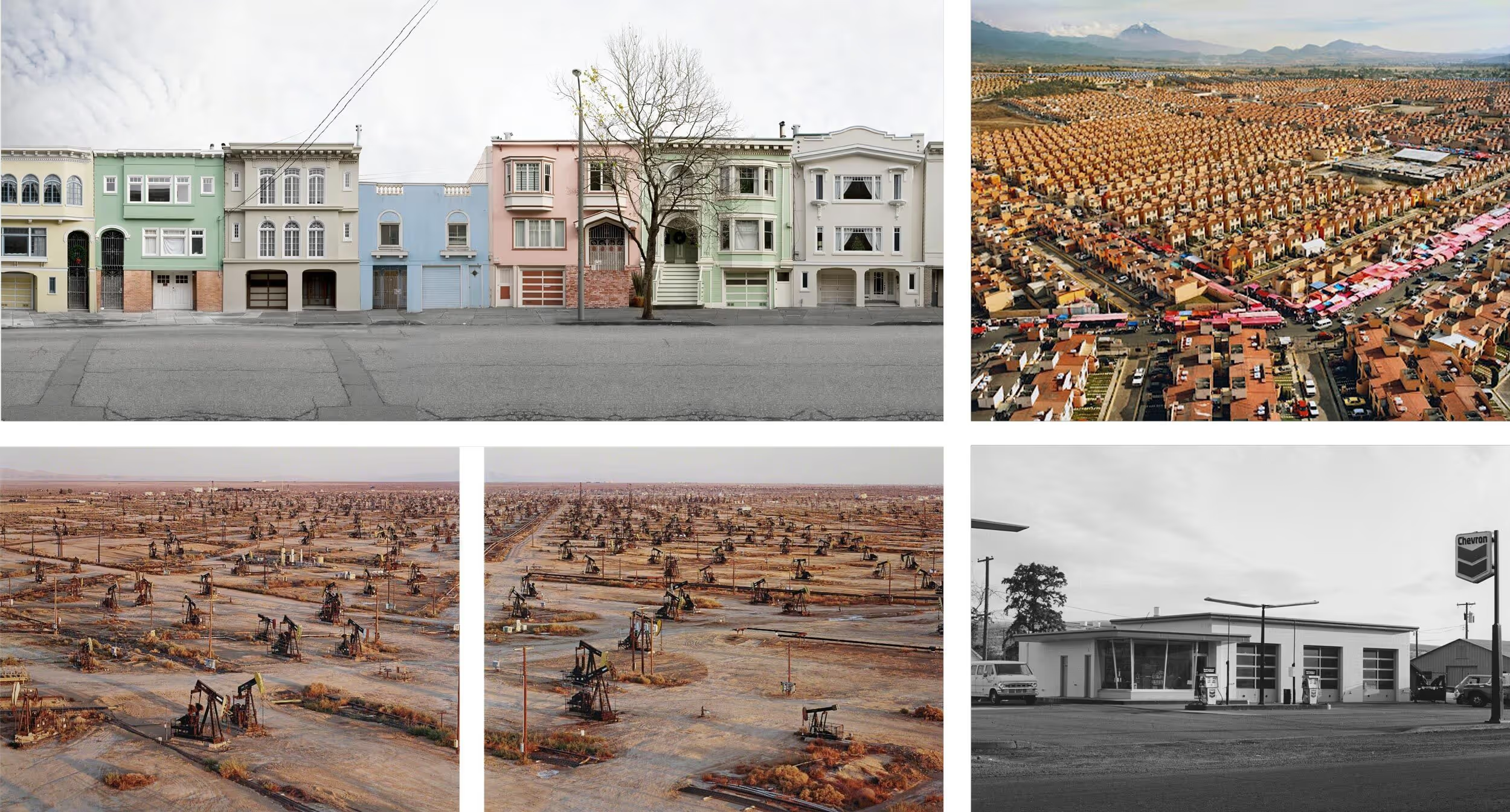
These were a few of the artists in Fabricated, an exhibition I curated years ago that brought together photographers looking at built environments we think we understand and rarely question.
While the exhibition was about architecture, it was also about a particular kind of blindness: how entire environments become so familiar we stop seeing them.
I think about that exhibition often. I’ve spent years working with climate and cleantech companies, which means walking conference floors, scrolling through websites, and sifting through pitch decks. As a creative director, my role in this world is helping build brands for companies trying to reinvent and evolve the energy system.
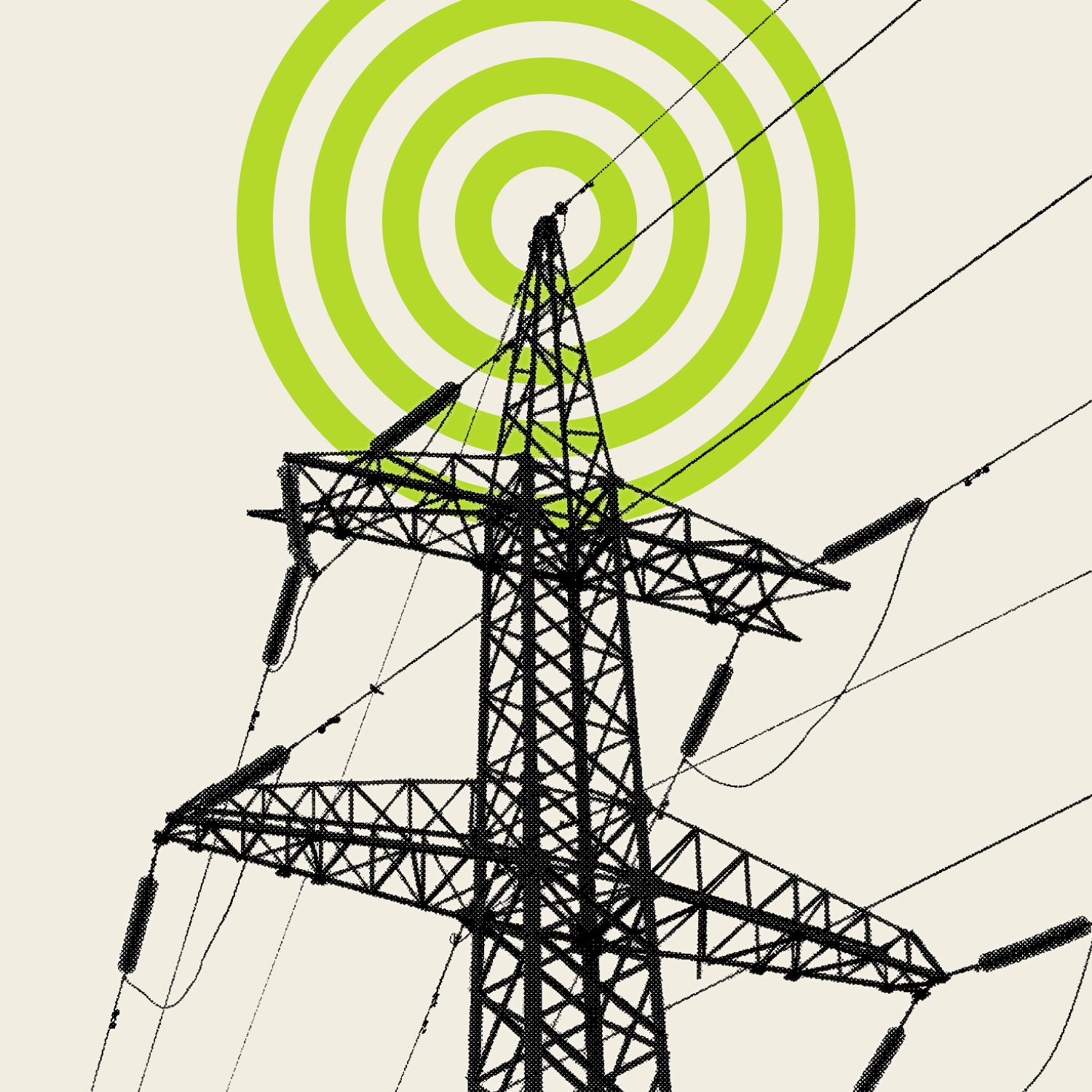
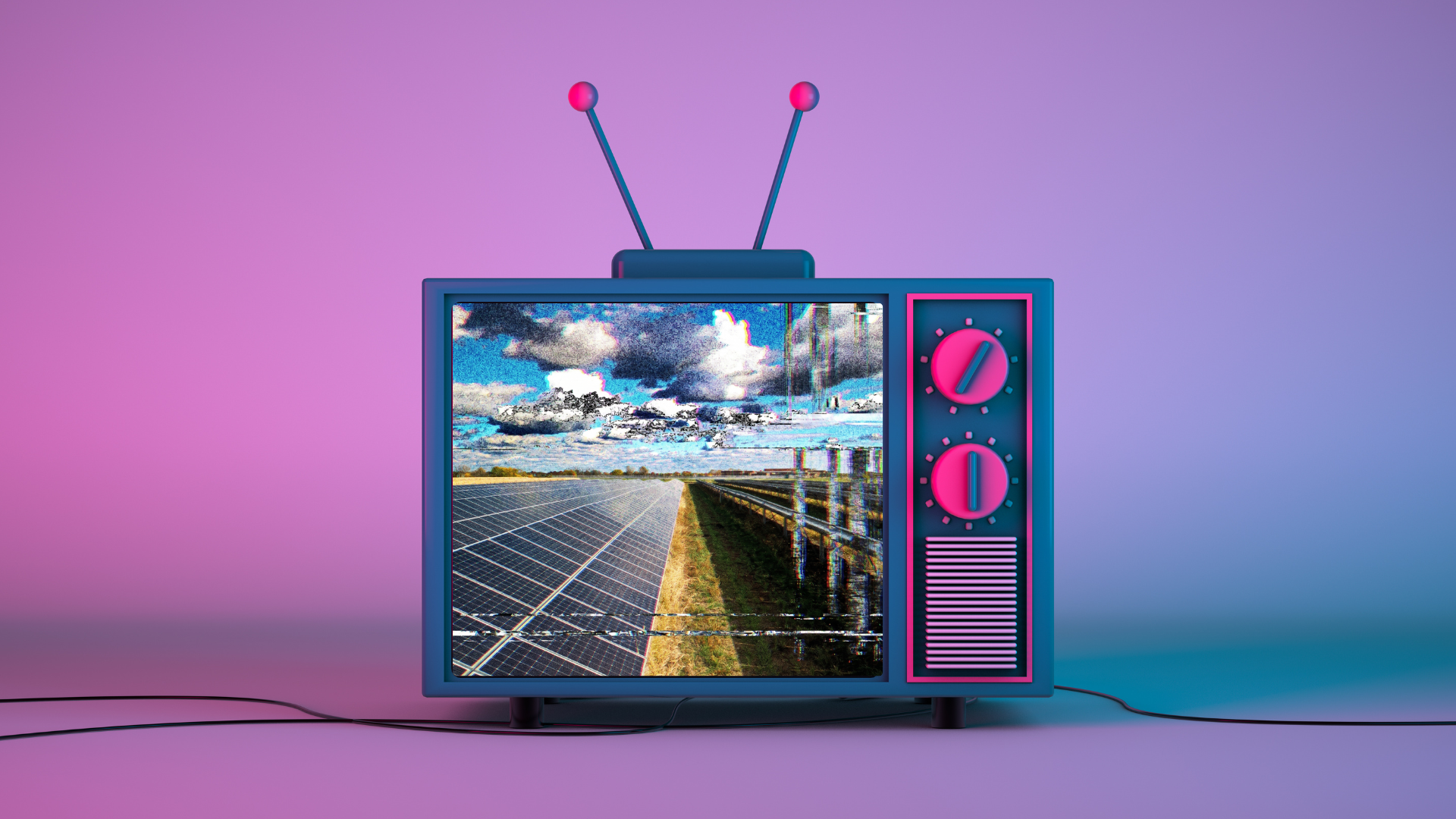
Spend enough time around climate tech, and a certain visual language starts to repeat itself. Blue-green gradients everywhere. Solar panels sit obediently in some field. A white container dropped into a perfect green field, labeled “Energy Storage". Two workers in orange vests are pointing at something just off frame. The same small handful of images repeats on an industry-wide loop, glowing on backlit conference displays, loading on homepage hero sections, and sliding through investor decks.
After a while, they blur together. Your brain just shrugs and files the whole thing away as “climate company.” Which is exactly the problem. Over time, it stops feeling like a set of branding decisions and starts feeling more like an environment you’re moving through — a kind of visual architecture. And like most architecture we live inside every day, it eventually stops being seen.
The companies themselves are anything but ordinary. They are analysts rethinking carbon, engineers redesigning the grid, chemists pulling fuels out of thin air — founders trying to rebuild the physical systems that modern life depends on.
Radical work is being presented inside a visual world that feels all too familiar.
In some cases, this approach makes sense. New ideas often need a familiar container to be legible. Pharmaceutical companies look clinical. Fintech companies resemble banks. The familiar visual language is trying to instill trust.
Climate technology is already asking people to accept a lot. Direct air capture. Long-duration storage. Parametric insurance. Synthetic fuels. None of that is easy to explain at a dinner party, let alone to an investor. So I get it. I've sat in enough brand kickoffs to know why founders want their visuals to feel reassuring. But to whom?
The visual language climate companies reach for didn't come from climate. It came from oil companies that needed to look like they were thinking about the future; consumer brands that discovered "eco-friendly" labels moved products; and corporate sustainability departments that spent years making climate action calmer, softer, and more carefully worded. They were very good at their jobs.
Climate technology is trying to build something fundamentally different from the system we inherited. Part of the problem is that founders are often taught to hide their most distinctive attribute: their point of view.
I didn't come into this work from marketing. I came from the art world. And what that world taught me — the thing you learn by standing in front of enough work by enough artists — is that originality is rarely about novelty. It's not about looking different for its own sake.
It's about being willing to look like yourself.
The artists whose work stops you in a gallery aren't the ones trying hardest to look different. They're the ones with the clearest point of view. The most specific way of seeing. The work that can only have come from them.
I once read the critic Jerry Saltz describe artmaking as a kind of culturescape — a record of memory, ambition, neuroses, time, and point of view. He was talking about paintings. But the same idea applies to brands, if you know where to look. The distinct way a founder understands the problem. The particular intelligence behind the work. The conviction that inspired them to start the company in the first place. Where is your point of view, dammit?
When that shows up — visually, narratively, strategically — people feel it. They remember it. Over time, that point of view doesn’t just shape how a company talks about the future. It begins to shape what the future actually looks like.
Which raises a simple question: if your technology succeeds, what world does it create?
The research group Near Future Laboratory describes design fiction as a way of making possible futures tangible — not explaining an idea abstractly, but creating artifacts from that world so people can begin to imagine it as real. Climate companies are already building those artifacts in the real world. Carbon removal plants, synthetic fuels, long-duration batteries, and new grid architectures — fragments of a different energy system. Pieces of a world that does not fully exist yet.
The challenge is that the visual language surrounding many of these companies still belongs to the system they're trying to replace. The imagery and tone come from the culture of corporate sustainability: careful, incremental, quietly reassuring. That language once served an important purpose. It signaled responsibility and restraint. But it was designed for a world that was trying to manage a problem, not solve it.
The companies building climate technologies are trying to do something more ambitious than that. They are attempting to change the underlying infrastructure of modern life.
When the visual language of those companies looks indistinguishable from the past, it quietly communicates that nothing has really changed. The goal isn't unfamiliarity for its own sake. People still need signals they recognize to trust something new. What climate companies need instead is a different kind of familiarity — a visual world that feels credible but unmistakably new.
Architecture does this all the time. Entire eras become recognizable through the forms of their buildings. Shapes and materials tell the stories of our changing society.
Climate technology is now reshaping the infrastructure of civilization.
The strange thing is that the people building these companies are rarely cautious thinkers. They are attempting things that, a decade ago, sounded impossible. They are already comfortable with strange ideas.
It's only when those ideas reach the pitch deck that everything becomes polite. The edges get sanded down. The company starts to look like every other climate company in the room. I’ve had versions of this conversation with founders dozens of times: brilliant people doing genuinely new things, presenting them inside a visual language that suggests nothing has changed.
The visual culture of an entire industry is still waiting to be written. The companies that write it won't just look different from everything that came before. They'll signal, clearly and unmistakably, that something has actually changed. The ones that don't will fade into the background like every other building you've stopped seeing. Invisible architecture rarely changes anything.
—
Melissa Stafford-Woodruff is Creative Director at DG+, where she leads brand and design work with climate and clean energy companies. She also runs the Brand Sameness Audit, a short brand calibration conversation for founders and marketing leaders preparing for moments of growth, visibility, or scale. A limited number of conversations are scheduled each month.
Read more news and insights from the DG+ team.
.png)

.png)
Let’s talk about what you’re building.
Whether you’re refining your positioning, preparing for growth, or trying to make a complex product easier to understand, we’d love to hear more. Share a bit about your goals or challenges and we’ll get back to you with a clear, honest perspective on how we can help.
Skip the form and email us directly at hello@dgplusagency.com