
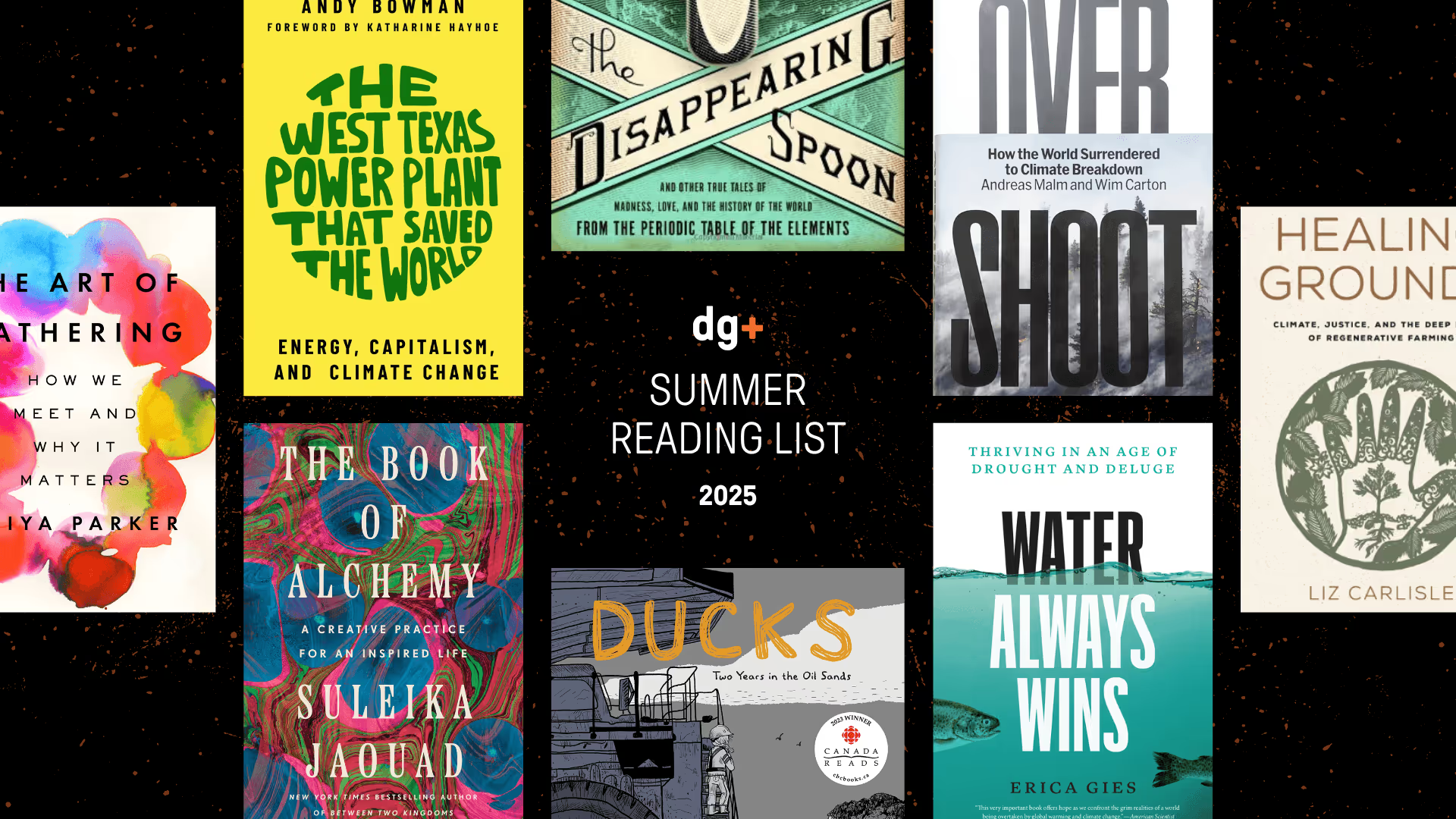
It’s officially summer and being the nerds that we are, our idea of a “beach read” looks a little different at DG+. While others may be reaching for steamy thrillers or escapist fiction, we’re diving into books that explore climate, creativity, and the ways we care for each other and the world around us.
Our summer reading list spans everything from the inextricable link between climate justice and regenerative agriculture and the strange histories hidden in the periodic table, to a comic memoir set in the oil sands of Alberta and how to focus on what we can control in a chaotic world. Whether you’re lounging poolside or sneaking in a few pages between Zoom calls, we hope these reads offer grounding perspective and spark meaningful conversations.

The West Texas Power Plant That Saved the World: Energy, Capitalism, and Climate Change
By Andy Bowman
“A former DG+ team member, Gavin Chisholm, recommended this book to me as an effective historical overview of the solar industry and its growth. I was initially skeptical of another climate-related solar primer, but I definitely agree. Andy Bowman crafts an engaging nonfiction read of solar project development, policy, and project finance that adds perspective to solar's journey to scale. The book also includes a comparison of fossil fuel and renewable energy subsidies that is particularly timely given the current debate around the One Big Beautiful Bill Act in Congress.”
— David Ganske

Ducks: Two Years in the Oil Sands
By Kate Beaton
“Ducks is both a coming‑of‑age narrative and a skillful, subtle commentary on class, misogyny, and the human costs of environmental extraction. From the oil fields to the hallways of worker housing, Kate Beaton’s comics are rich with quiet revelations, intimate details, and a deadpan, devastating sense of humor. A generous and illuminating book; I suspect it will stay on my mind for a very long time.” (Anna Wiener, Uncanny Valley)
— Selected by Julianne Waite

The Book of Alchemy: A Creative Practice for an Inspired Life
By Suleika Jaouad
“I chose The Book of Alchemy by Suleika Jaouad not because it ties directly to climate or design, but because right now everything feels a little chaotic and outside of our control. What we can control is what we create. This book is a meditation on that truth—a collection of reflections and prompts about journaling as a creative lifeline during uncertain times. For me, it’s a reminder to keep my own creative practice going, to carve space for beauty even when the world feels messy, and to continue making things simply for the sake of making. Despite all the noise — waves hand around — I'm choosing to keep creating.”
— Melissa Stafford-Woodruff

Water Always Wins
By Erica Gies
“Enter slow water: Erica Gies’ compelling concept for saving humanity from a future without water. The book unpacks our complex relationship with this essential resource by examining how we've disrupted natural water systems, how those disruptions intersect with the climate crisis, and what can be done to restore balance. It challenges how we think about infrastructure and offers a renewed sense of reverence for water. As someone who’s spent over a decade in climate work, I found this deep dive illuminating and an essential piece of the broader climate puzzle. And while the subject matter can be sobering, Gies’ focus on actionable solutions and her hopeful tone make it surprisingly soothing — perfect for both beach days and bedtime reading. For systems-thinkers and climate-minded readers, this is a must-read.”
— Genevieve Resnick

Healing Grounds
By Liz Carlisle
“I've admittedly had this book on my shelf for nearly two years and was pulled to finally crack it open after a recent week-long on-farm experience I had with Climate Farm School. While I went into the course interested in the role regenerative agriculture plays in sequestering carbon, I came out of it even more interested in the human and social component of our food systems and how we got so far off course from this method that has in fact been practiced for millenia. Healing Grounds explores how Indigenous, Black, Latinx, and Asian American farmers are reviving ancestral agricultural practices to heal land and address climate change. The book highlights the connection between regenerative farming and racial justice, showcasing how these communities are restoring ecosystems, enriching soil health, and fostering resilience in the face of historical and ongoing injustices within the food system.”
— Barbara Weber

Close to Home
By Thor Hanson
“I have been on a journey through the last decade of my life to find ways to best experience and influence the world by focusing on what's within reach — whether that be through building community close to home, making sustainable swaps in my daily routines, or getting familiar with the plants and birds dotting my urban-suburban neighborhood. This book is an excellent way of deepening my understanding of the little ecosystems that exist right here and now, providing ideas for how to improve them while scratching the itch of my own curiosity. As Amy Stewart, author of The Drunken Botanist wrote, "Close to Home invites us to step into the ordinary and discover the extraordinary. With Hanson as our guide, a walk around the block becomes an opportunity to explore, to conserve, to ask questions, and to broaden our horizons."
— Lanie Meyers

The Art of Gathering: How We Meet and Why It Matters
Priya Parker
“I've been slowly making my way through this book for a couple months, and with every chapter I'm more convinced of its importance, especially in the age of disconnection and upheaval we're living through. Whether it's a meeting, a dinner party, a picnic, a protest, a birthday, a wedding — how we show up and make space for one another has the ability to create deep ties with the people around us and bring us together in meaningful ways.”
— Dana Filek-Gibson

The Disappearing Spoon: And Other True Tales of Madness, Love, and the History of the World from the Periodic Table of the Elements
By Sam Kean
“The Disappearing Spoon shows that even the most technical topics can come alive through great storytelling. Sam Kean uses the periodic table as a narrative framework to uncover fascinating tidbits of history, science, and personality. Just as every element has a story, so does every business, technology, founder, and customer. In climate and cleantech, complexity or lack of subject matter familiarity can be a barrier. Relatable narratives create common ground and encourage curiosity.”
— Leah Hess

Overshoot: How the World Surrendered to Climate Breakdown
By Andreas Malm and Wim Carton
“In this hard-hitting (and admittedly non-uplifting) book, Malm asks why it is that the world has surrendered the fight to keep global temperature rise to 2°C above pre-industrial times. I picked up this book because I knew that Malm is a well-known scholar of the politics of climate change but an author I hadn't read before. As someone who's fascinated by the political dimensions of climate change and energy, I'm trying to broaden my perspective on the deep roots of influence of the fossil fuel industry. This book explores this topic wonderfully.”
— Walter James
Read more news and insights from the DG+ team.
.png)

.png)
.avif)
Let’s talk about what you’re building.
Whether you’re refining your positioning, preparing for growth, or trying to make a complex product easier to understand, we’d love to hear more. Share a bit about your goals or challenges and we’ll get back to you with a clear, honest perspective on how we can help.
Skip the form and email us directly at hello@dgplusagency.com