
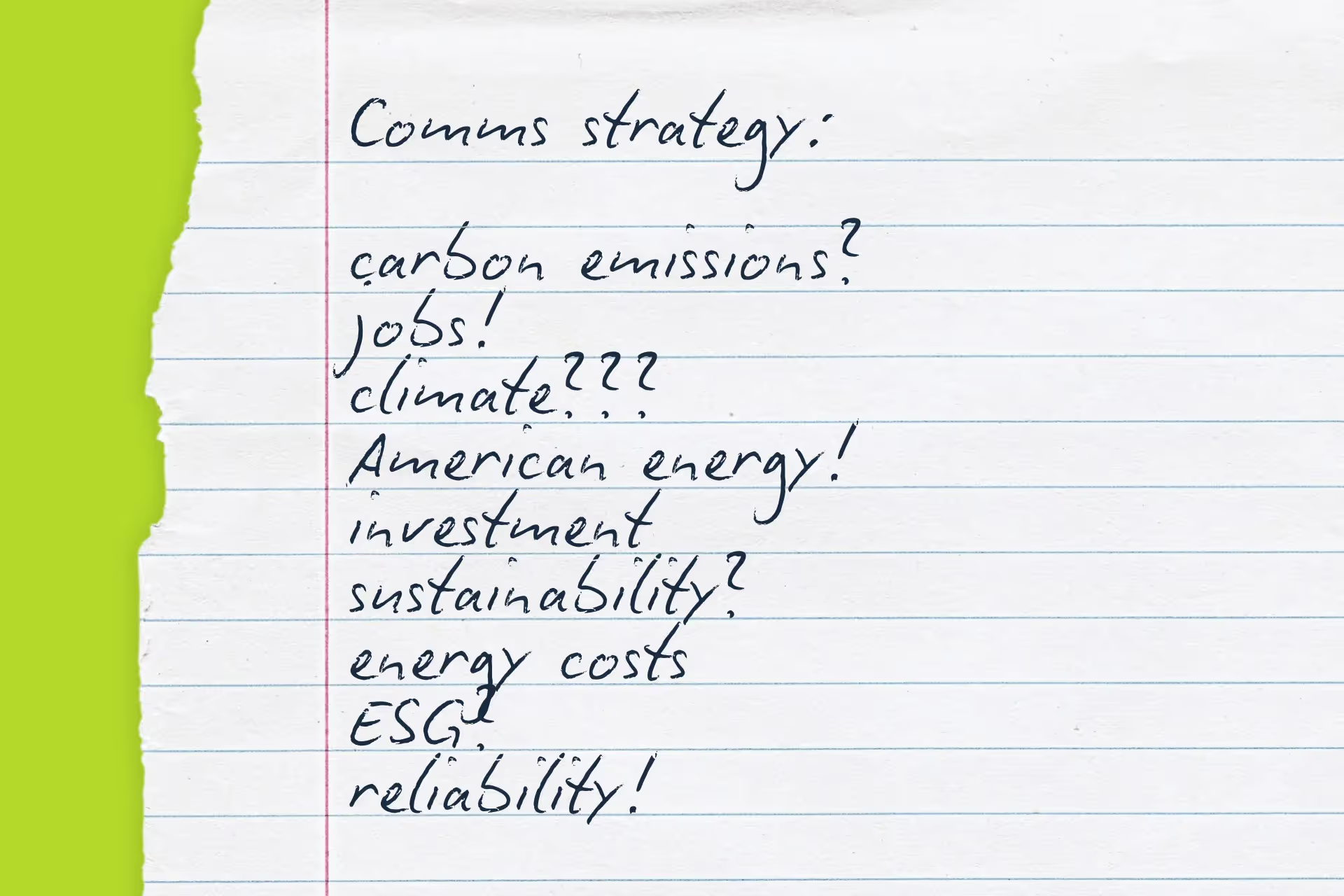
The cleantech industry is navigating a complex landscape of economic pressures, cultural shifts, and political uncertainty. It's increasingly important for business leaders and in-house marketing and communications teams to mitigate risk in this new environment while still speaking directly to their core audiences, pushing to reach new audiences, and maintaining growth.
Messaging that once felt safe — centered around climate action, sustainability, or even diversity — is now under increased scrutiny. And with political shifts now threatening federal incentives, cleantech and climate tech businesses need to rethink how they communicate their value in this moment. This article outlines practical steps to reassess your cleantech communications strategy, adapt to evolving policy narratives, and keep your business growing even in turbulent times.
First, consider broader trends
In 2025, the clean energy market faces increased pressure from shifting federal policies and a polarized political climate. Founders and marketers must understand how to frame their value proposition in a way that resonates with diverse stakeholders. The good news is that the cleantech industry — and the energy transition as a whole — has proven that it can withstand political swings while becoming increasingly mainstream and bipartisan.
Why does this matter now? Because clean energy companies are increasingly being pulled into political conversations they didn’t choose. Words like “sustainability” and “climate” are being weaponized in some political, financial, and corporate circles, among other places, while even technologies like solar or EV charging — once politically neutral — are becoming flashpoints in broader cultural debates.
Messaging in today’s environment
Even with policy changes, core messages about clean energy’s value are still the most broadly compelling, especially when framed around economic growth and national security. Some of the themes that resonate most with policymakers and bipartisan audiences include:
- Lowering energy costs for American families and businesses
- Creating and protecting clean energy jobs
- American competitiveness in manufacturing and innovation
- Grid reliability and supply to meet rising electricity demand
- Supply chain certainty (i.e. preventing disruption)
Conversely, making an overly emotional appeal for cleantech tends to fall flat, even among audiences passionate about the energy transition. Urgency without tangible solutions does not drive home the real-world value of cleantech for American businesses and families, either, and partisan language is, by nature, politically divisive.
It’s important to note that the messaging that works has always worked. When I started in the solar industry back in 2010, it was already common practice for renewable energy companies to focus on economic impact (i.e. energy savings) and not climate impacts. Sure, it’s true that many people care about the environment, but the majority of people will not make a move until it makes sense for their pocketbook.
There is evidence that this messaging is working in today’s environment. Last month, 21 House Republicans wrote a letter in support of clean energy tax credits in the Inflation Reduction Act, emphasizing “the importance of prioritizing energy affordability for American families and keeping on our current path to energy dominance.” They were joined by four Senate Republicans on April 9.
Second, evaluate what’s right for your team
The overarching question when considering what to do for your own communications strategy is to evaluate your risk appetite and what it might mean for your organization. Communicating the climate benefits of the cleantech industry remains a possibility, however businesses must do so with the awareness that “climate change” can be a sensitive term. Some companies know that climate-focused messaging resonates directly with their audience or is a key part of their corporate values. Others may find that they want to mitigate potential risk by avoiding any polarizing messaging altogether.
But is being too cautious itself a risk? Yes, it can be, but unfortunately, there is no straight answer. That’s why we put together a tool to evaluate where you fall, or where you want to fall, on the communications spectrum.
The DG+ Climate Communications Spectrum
This spectrum is a tool that illustrates how companies can position their messaging strategy based on risk tolerance, values, and audience expectations.
On one end of the spectrum, you could be a vocal advocate for sustainability and climate solutions. The upside of this approach is that it likely reflects your values and positioning of your products and services as part of the energy transition. The downside is that you would be sticking your neck out and exposing your organization to unnecessary risk.
At the other end of the spectrum, you could take defensive measures to change your messaging and positioning to reflect the current environment. The upside of this approach is that it reduces risk, and it may even better resonate with a bipartisan audience for the long term. The downside is that it may move against your mission and values as an organization (i.e. reducing climate-focused messaging), core messages that drive your employees and customers to you.

The reality is that there is no simple answer. Because it is a spectrum, as shown above, it’s up to leaders to decide where they should fall as an organization. What is your level of risk appetite? How susceptible are you to political shifts? It is important to note that you can move along the spectrum over time, too.
Identify policy topics that matter most
Things have been happening at a furious pace over the first few months of the Trump administration. Before reacting to every policy update or industry headline, stop to take a breath. Not every news cycle requires a public response. Instead, take your time to evaluate, reflect, and assess what matters to you. Moreover, you don’t need to track every policy shift, but you do need to know what directly impacts your business.
Ask yourself: What policies are most important to our organization? How important are they? Are you directly impacted or indirectly impacted by any changes? You likely know the answers to these questions very intimately.
The purpose of this exercise is to understand when you may want to speak publicly about a particular policy change. Here’s a table that shows how you might evaluate different policies if you were, say, a solar developer:
Conduct a messaging audit
A messaging audit is a structured review of all the ways your company communicates to ensure alignment with current market realities and business goals. This process helps you uncover outdated language, inconsistent narratives, or missed opportunities to connect with key audiences. By evaluating everything from your website and social media bios to pitch decks and internal materials, you can identify what still works, what needs tweaking, and where new messaging might be required.
Review public materials
- Website: Is your homepage speaking to the current realities of your industry? Are there any messaging red flags? Do you have older blogs or other content that are now out of touch?
- Sales collateral: Are you highlighting policy incentives that may be outdated or under threat?
- Social media profiles: Do your bios and posts reflect your brand's most up-to-date positioning?
Ask yourself key questions:
- How effective is your messaging today across core audiences?
- Have you posted anything that is too partisan or political?
- Are there legislative changes (or pending ones) that impact your work?
The purpose of this audit is to gather information that can be used later. These materials may need to be revisited often to ensure that they align with your business goals and any potential defensive communications efforts.
Third, solidify action items
Now that you have considered the existing environment and you have an understanding of what might make sense for your organization, you can plan concrete action items.
Internal alignment
Internal alignment ensures that every team member, from executive leadership to the most junior staff, understands and consistently communicates your company's mission, values, and market position. In times of policy uncertainty, this becomes even more critical.
We recommend holding internal meetings to clarify your approach and give examples of acceptable (or unacceptable) messaging. You may even hold formal training sessions or create internal FAQ documents to serve as a reference point over time. Public-facing leaders should receive ongoing media training to ensure they are ready to answer (or deflect) policy-related questions.
Adapt your messaging thoughtfully
Based on where you think your organization should fall on the communications spectrum and the status of your messaging today, make a list of strategic, subtle shifts that you need to make. Begin by revisiting how your brand communicates around topics like climate, jobs, and manufacturing. Are there opportunities to reframe your value proposition in language that resonates across political lines?
The goal is to refine, not dilute, your key messaging so it aligns with the broader environment without giving up the special sauce of what makes your organization unique.
Update external communications
Once your messaging is refined internally, it’s time to apply those updates across your public-facing channels. Review and refresh your website copy, marketing collateral, pitch decks, and social media bios to reflect your updated positioning.
If you are on the more proactive side of the communications spectrum, you may consider publishing blog posts or LinkedIn articles that address timely topics. You might even submit op-eds to relevant publications or participate in media interviews in response to policy shifts.
Get help where you need it
If all of this seems daunting or you simply don’t have the internal bandwidth to deal with these steps, you can always consider getting external support. At DG+, we work as a partner of your team by building strategy, crafting compelling stories, generating buzz around press-worthy company news, and driving real results through thoughtful storytelling and proactive media engagement.
Our services begin with ensuring each client has a strong communications foundation, including PR and communications campaign planning, strategic messaging development, media-ready resources, and media training for key spokespeople.
Once this foundation is complete, DG+ works as a partner to execute tailor-made PR and communications plans that highlight key announcements and fit into your company’s larger brand narrative.
Want to learn more? Simply reach out to the DG+ team via the form below. We would love to hear from you.
Read more news and insights from the DG+ team.
.png)



.png)
.avif)
Let’s talk about what you’re building.
Whether you’re refining your positioning, preparing for growth, or trying to make a complex product easier to understand, we’d love to hear more. Share a bit about your goals or challenges and we’ll get back to you with a clear, honest perspective on how we can help.
Skip the form and email us directly at hello@dgplusagency.com