
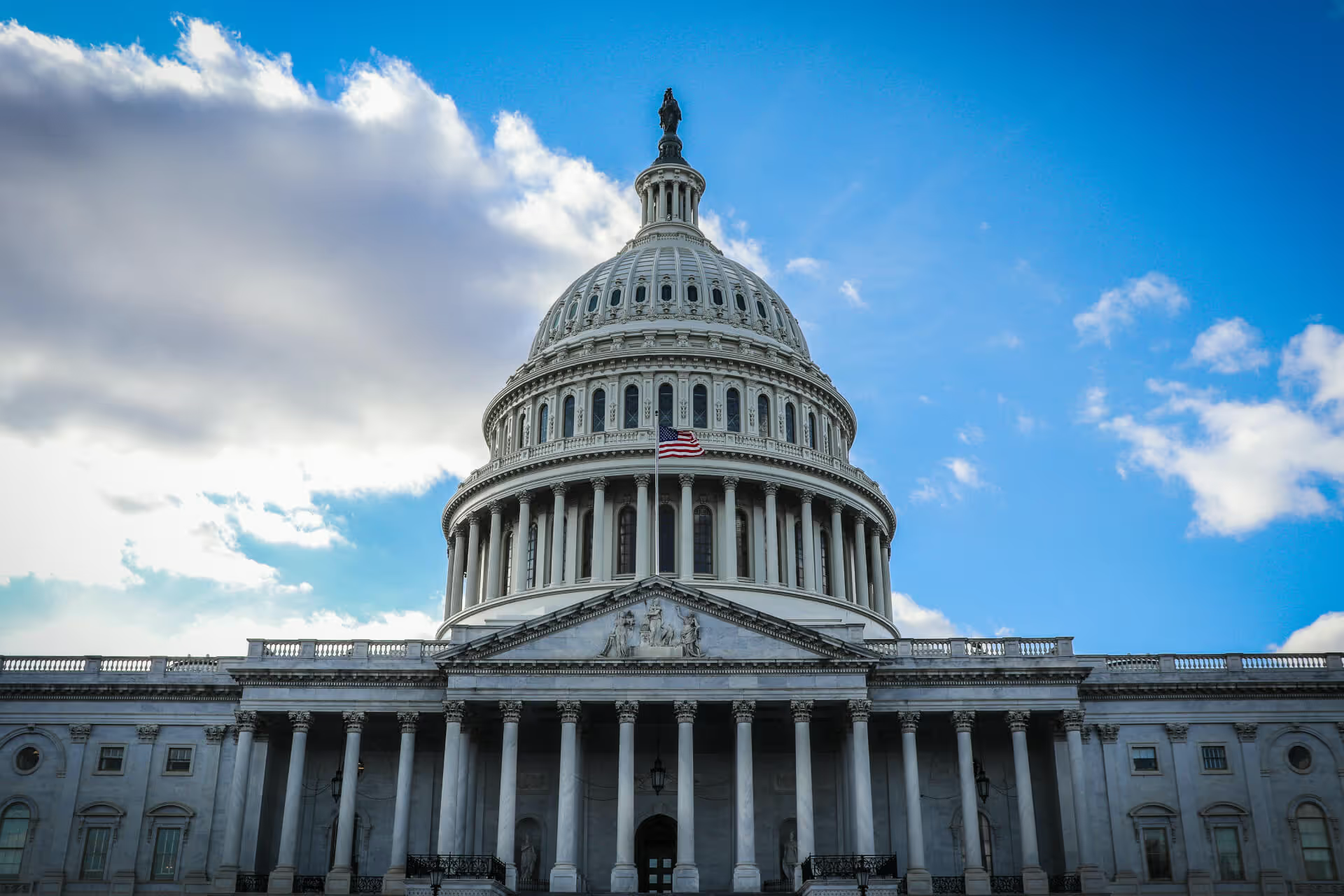
With elections looming in November, there is considerable anxiety over what a change in the federal administration could mean for clean energy and environmental policies.
As of the time of this writing, Trump is slightly ahead of Biden in most polls on the general election. The staff at federal agencies are rushing to finalize environmental and climate rules to make them difficult to repeal.
That’s because many fear what a Republican victory over the White House or Congress would mean for the progress this country has made in climate and clean energy policies over the last couple of years. Last month, E&E News reported that a second Trump presidency and/or a Republican-led Congress would likely see the halting of a number of environmental regulations that are still in the works, including tailpipe pollution limits, greenhouse gas emissions curbs on power plants, job security measures for federal employees in environmental agencies, and many more.
Reuters and the New York Times have also recently reported Republican advisers are considering rolling back existing clean energy and EV tax credits under the Inflation Reduction Act (IRA); expanding oil, gas and coal development; ending the Biden administration’s pause on new LNG export permits; and once again withdrawing the U.S. from the Paris Agreement.
Climate policies benefit the working class and Republican districts
But any potential rollback of these policies is unlikely to be straightforward. That’s because many of the climate policies in the last several years prioritize equity, benefitting rural and working-class communities that often overlap with Republican districts.
This is despite arguments by Republicans that environmental and climate policies kill working-class jobs. A case in point is the report by Republicans on the Senate Committee on Environment and Public Works that argued that the IRA’s “climate provisions will decimate the nation’s coal and natural gas sectors, kill American energy jobs, and compromise our energy security.”
Yet study after study has projected and confirmed the IRA has created thousands of jobs. According to the Clean Investment Monitor, more than 211,000 clean energy jobs have been created across 45 states and Puerto Rico, and 57% of these jobs are in Republican-represented states. The vast majority of these jobs are in EV and battery manufacturing. In swing states like Arizona, Georgia and Michigan, too, nearly 62,000 jobs were created thanks to the IRA.
What clean energy companies can do now
It’s easy to despair at the pendulum-swing and hyper-partisanship that characterizes so much of American politics today.
But there’s hope. In the case of the IRA, part of what will decide its fate is education and public awareness. The Biden administration has on occasion touted the benefits of the IRA, but not enough. Pressure is growing for the Biden campaign to tout the impact the IRA — legislation that most Americans are not aware of — has had on the country’s clean energy sector. To fill this knowledge gap, dozens of groups are engaged in storytelling campaigns to educate Americans on the successes of the IRA for their communities.
Clean energy companies can take similar steps by sharing accurate, easy-to-understand information about the impact these federal policies are having on their businesses and the communities they operate in. You may have employees in rural areas and offices or manufacturing facilities in predominantly Republican districts. You might have benefitted from clean energy and environmental policies in the past year or two. If so, then the best thing you can do might simply be to talk about it with your employees, their families and the communities where you do business. Explain how these policies have affected your business and, in turn, impact their everyday lives.
Depending on the outcome of this year’s elections, it’s fair to prepare for the possibility of adjustments — even major changes — to existing energy policies starting next year. Business leaders need to monitor those changes and anticipate how they will affect them in the short to medium term. That will be vital, not just for your own bottom line and operation, but also for the clean energy momentum that we’ve seen in this country over the last year.
Read more news and insights from the DG+ team.
.png)


.png)
.avif)
Let’s talk about what you’re building.
Whether you’re refining your positioning, preparing for growth, or trying to make a complex product easier to understand, we’d love to hear more. Share a bit about your goals or challenges and we’ll get back to you with a clear, honest perspective on how we can help.
Skip the form and email us directly at hello@dgplusagency.com